Booster Pack
Marvel's Spider-Man - Play Booster Pack
- Market Price
- $5.03
- MSRP
- $6.99*
- Against MSRP
- ▼ 28% vs MSRP
- Loose
- $5.03
- Each, in the sealed product
- $3.65

SPM · Magic: The Gathering
288 cards, led by The Soul Stone (Borderless) at $1,816.40.
Released Sep 26, 2025
Set index · SPM
96.65
−3.35 (−3.35%)1Y


The 5 most valuable · $249.54 – $1,816.40
A score that starts at 100 and moves with the set's fair value, compared on the same printings week to week.
One Near Mint copy of every printing at fair value; the chase cards move it most.
one of every printing · fair value · Nov 15, 2026
Near Mint was $5,194.91 on Aug 30, 2026 (-2.3%). Totals move when printings are added or first priced; the index above doesn't.
Every way Marvel's Spider-Man was sold, priced.
11 products
Booster Pack
Display
Inside
Display
Collector Booster Display
$31.94 per pack
Inside
Booster Bundle
Bundle
$6.96 per pack
InsideReported
Booster Bundle
Gift Bundle
$9.47 per pack
InsideReported
Collection Box
Scene Box
$11.63 per pack
Inside
Prerelease Kit
Prerelease Pack
$5.83 per pack
Inside
Booster Pack
Collector Booster Omega Pack
Booster Pack
Collector Booster Pack
Booster Pack
Collector Booster Pack (Minimal Packaging)
Other
Web-Slinger's Kit
$9.10 per pack
InsideReported
* Standard MSRP for that product type, or a bundle's count × that price.
Open one. Then see how often each hit turns up.
Pack $41.95
Tap the pack. Every card is drawn from the pack's real odds.
16 cards a pack · 1 traditional foil spiderweb basic land · 15 hit slots
U
1 in 1
packs · 87.3%
C
1 in 1
packs · 85.8%
R
1 in 1
packs · 77.9%
T (traditional foil double-sided token)
1 in 2
packs · 65.0%
R (traditional foil extended-art card)
1 in 2
packs · 54.0%
R (non-foil extended-art card)
1 in 2
packs · 50.8%
R (traditional foil panel card)
1 in 6
packs · 16.4%
R (non-foil panel card)
1 in 6
packs · 15.4%
M
1 in 9
packs · 11.0%
R (traditional foil web-slinger card)
1 in 10
packs · 9.80%
R (non-foil web-slinger card)
1 in 11
packs · 9.20%
C (two-color land)
1 in 14
packs · 7.10%
M (traditional foil extended-art card)
1 in 18
packs · 5.70%
M (non-foil extended-art card)
1 in 19
packs · 5.40%
R (traditional foil scene card)
1 in 20
packs · 4.90%
U (traditional foil scene card)
1 in 21
packs · 4.80%
R (non-foil scene card)
1 in 22
packs · 4.60%
M (traditional foil panel card)
1 in 31
packs · 3.20%
M (non-foil panel card)
1 in 32
packs · 3.10%
M (traditional foil classic comic card)
1 in 40
packs · 2.50%
M (traditional foil web-slinger card)
1 in 63
packs · 1.60%
M (non-foil web-slinger card)
1 in 67
packs · 1.50%
M (non-foil scene card)
1 in 125
packs · 0.80%
Chance in one pack · Near Mint

Eddie Brock (0233) (Borderless)
$126.331 in 120

The Soul Stone
$117.481 in 136

Peter Parker (0232) (Borderless)
$95.001 in 120

Miles Morales (0234) (Borderless)
$46.811 in 120

Norman Osborn (Borderless)
$28.731 in 125

Gwen Stacy (0209) (Borderless)
$21.051 in 188
Norman Osborn (Borderless)
$16.181 in 65

Gwen Stacy (0202) (Borderless)
$13.531 in 125
288 of 289 valued in Near Mint

The Soul Stone (Borderless)

Spectacular Spider-Man (0235) (Borderless) (Textured Foil)

Spectacular Spider-Man (0236) (Borderless) (Textured Foil)

Spectacular Spider-Man (0240) (Borderless) (Textured Foil)

Spectacular Spider-Man (0239) (Borderless) (Textured Foil)

Spectacular Spider-Man (0238) (Borderless) (Textured Foil)

Spectacular Spider-Man (0237) (Borderless) (Textured Foil)

Spectacular Spider-Man (0241) (Borderless) (Textured Foil)
Eddie Brock (0233) (Borderless)
Peter Parker (0232) (Borderless)
The Soul Stone
Miles Morales (0234) (Borderless)
Norman Osborn (Borderless)
Gwen Stacy (0202) (Borderless)
Gwen Stacy (0209) (Borderless)

Norman Osborn
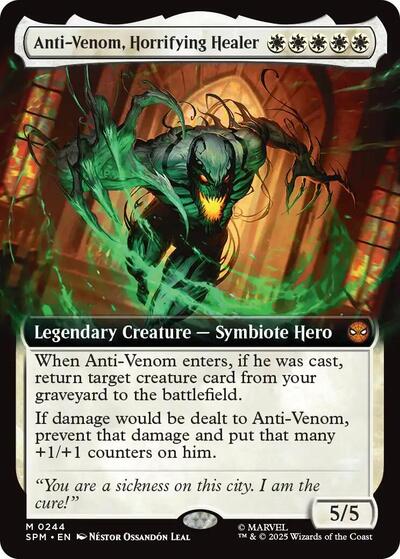
Anti-Venom, Horrifying Healer (Extended Art)
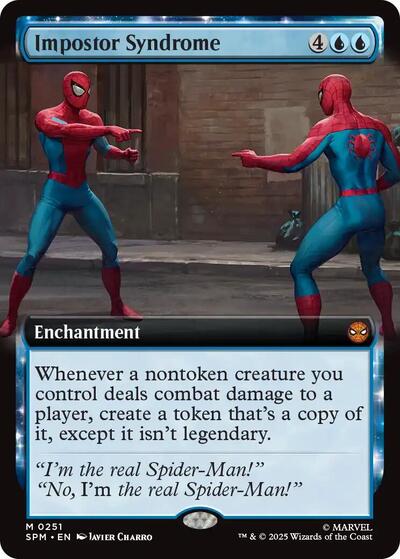
Impostor Syndrome (Extended Art)
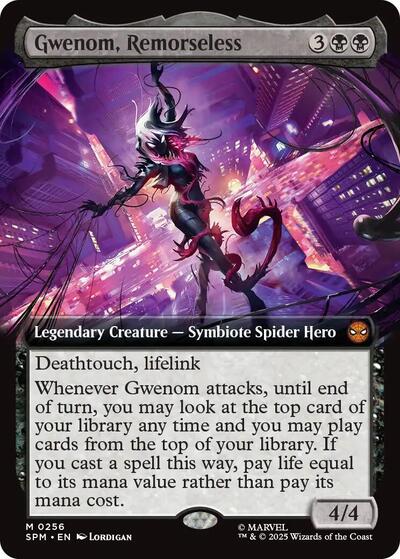
Gwenom, Remorseless (Extended Art)

Miles Morales (0200) (Borderless)
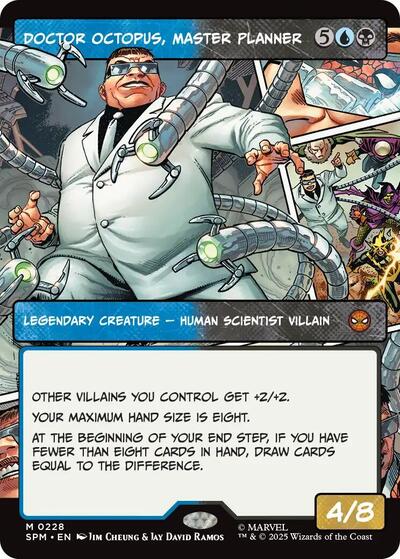
Doctor Octopus, Master Planner (Borderless)

Multiversal Passage (Borderless)

Miles Morales (0211) (Borderless)
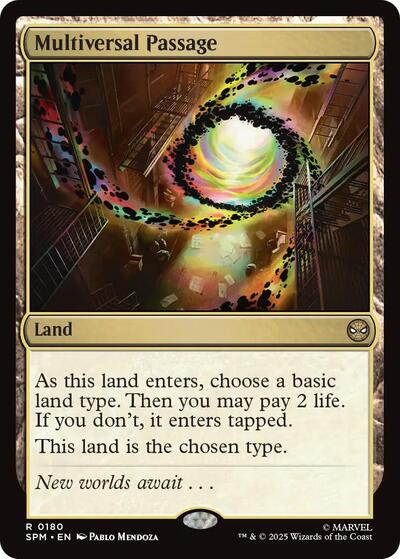
Multiversal Passage
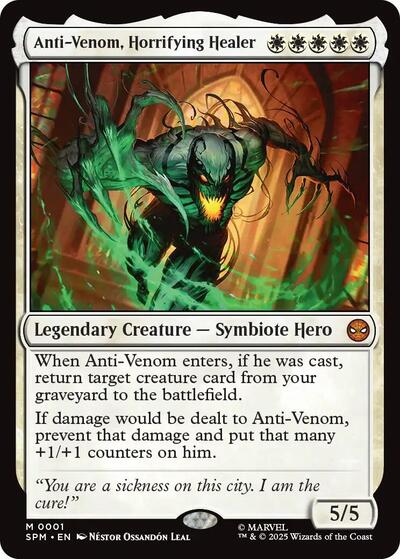
Anti-Venom, Horrifying Healer
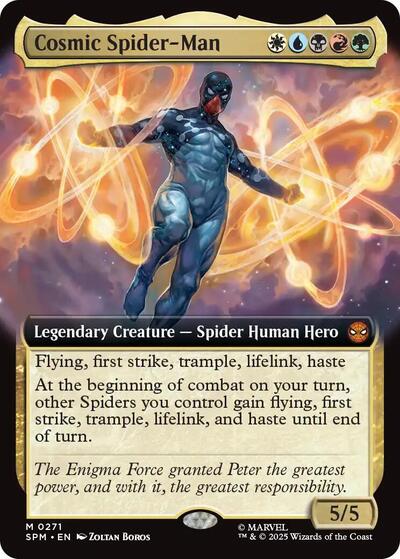
Cosmic Spider-Man (Extended Art)
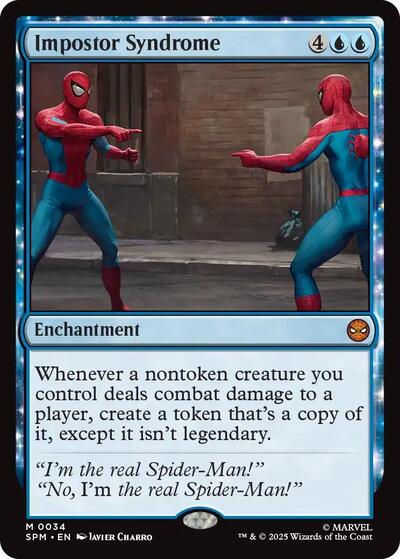
Impostor Syndrome
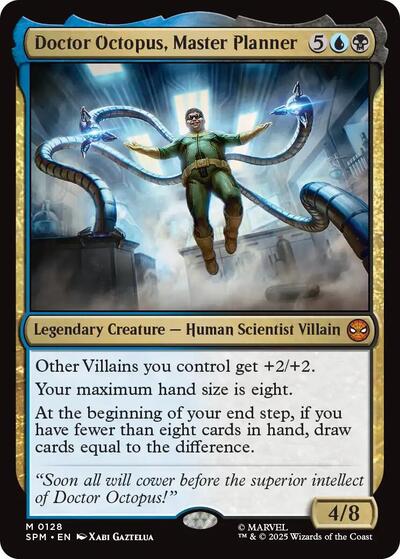
Doctor Octopus, Master Planner
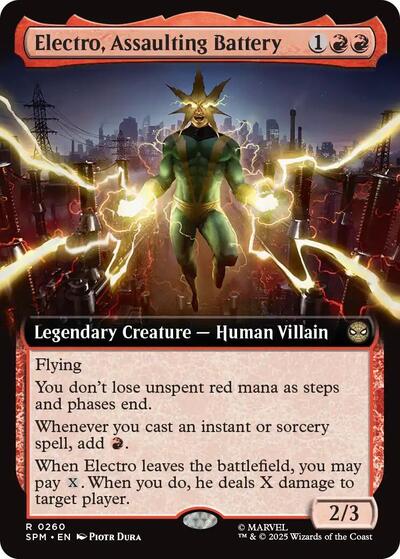
Electro, Assaulting Battery (Extended Art)

Spectacular Spider-Man (Borderless)

Gwenom, Remorseless
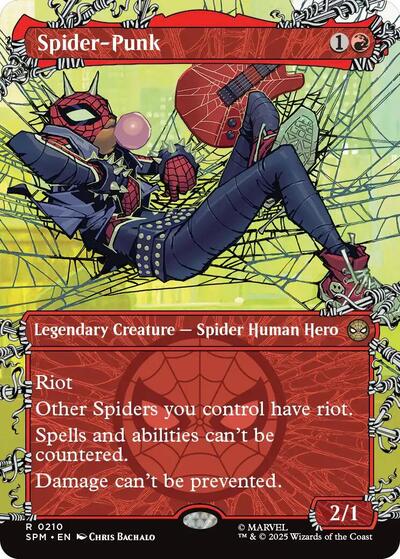
Spider-Punk (0210) (Borderless)
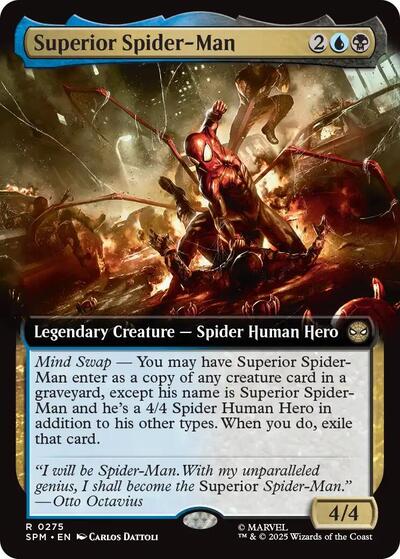
Superior Spider-Man (Extended Art)

Eddie Brock (0224) (Borderless)
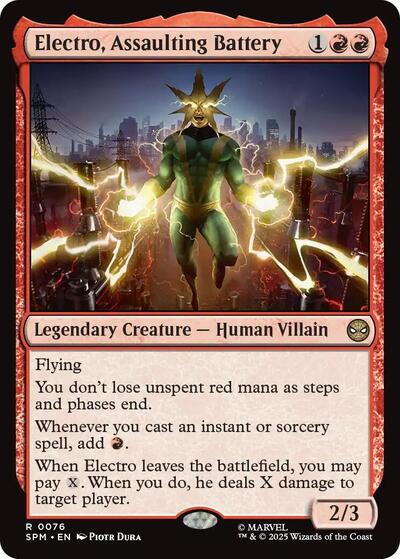
Electro, Assaulting Battery

Peter Parker (0208) (Borderless)
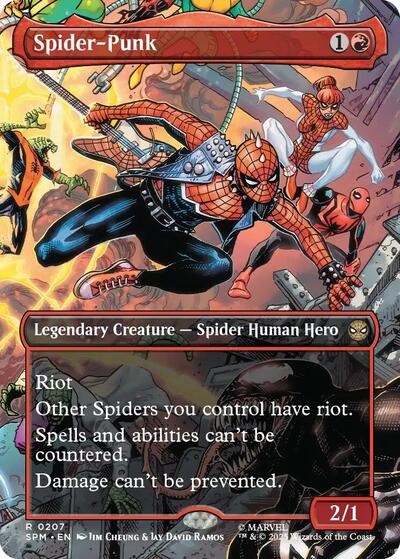
Spider-Punk (0207) (Borderless)
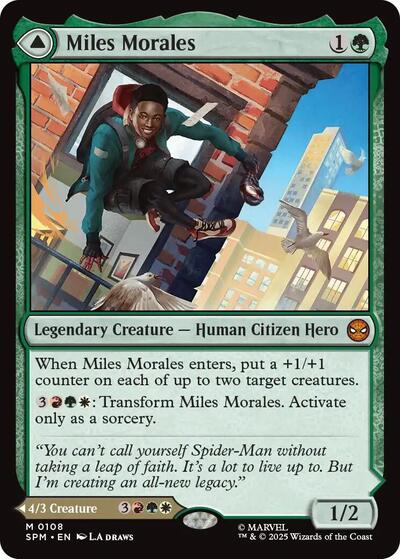
Miles Morales

Behold the Sinister Six!
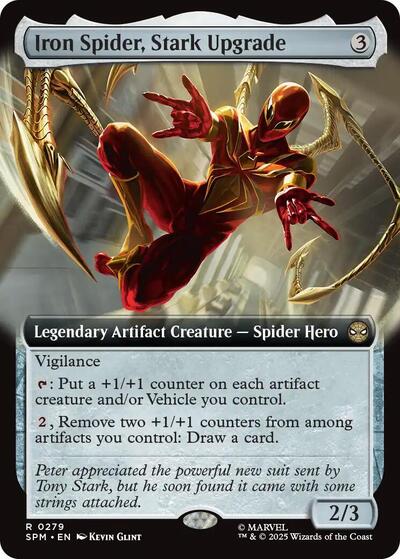
Iron Spider, Stark Upgrade (Extended Art)
289 singles tracked